
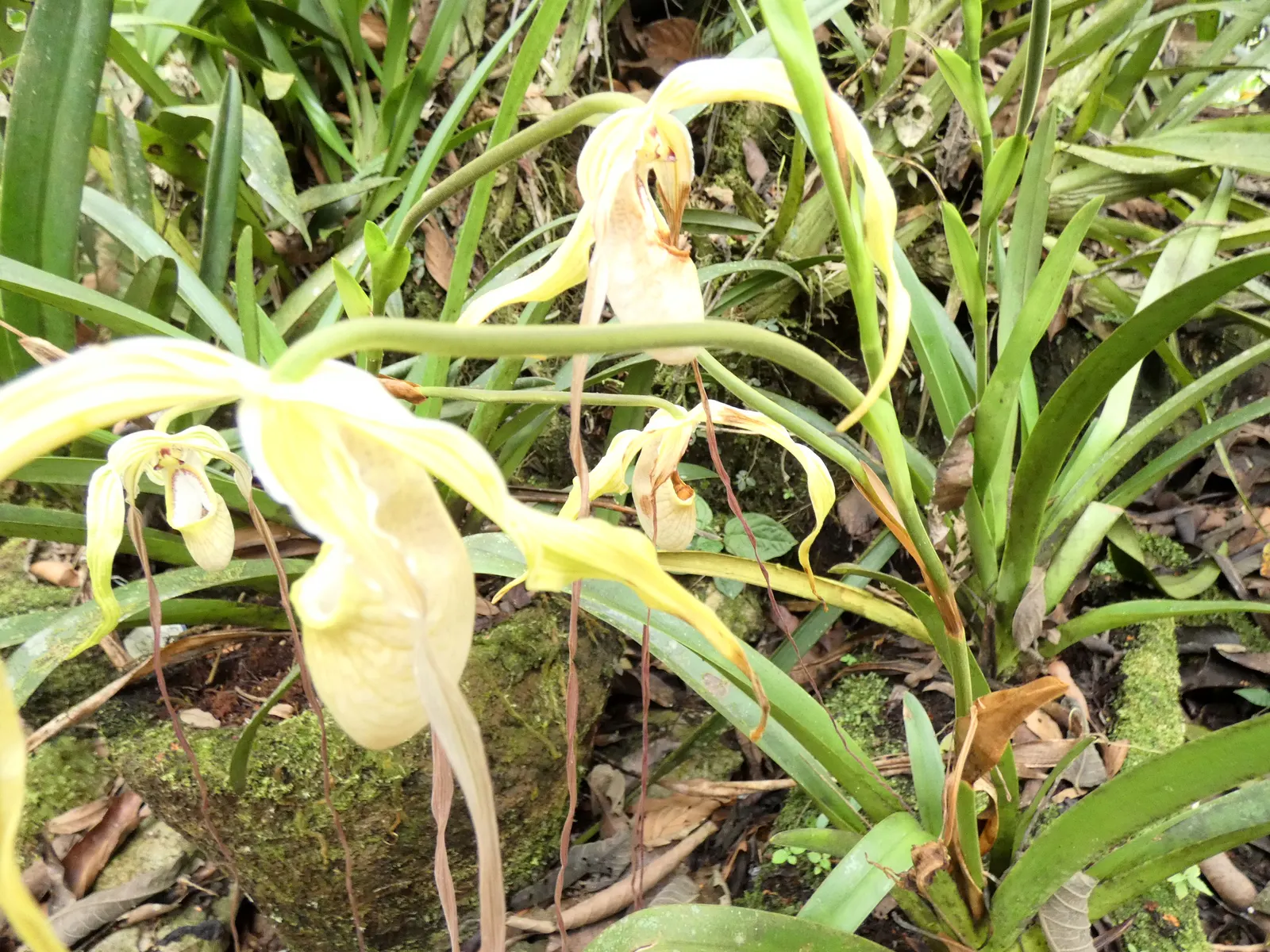
Moyobamba is known as the "city of orchids". It is more than a slogan: the cloud forests of the Alto Mayo are home to many species, and the city has gardens and nurseries where you can see them up close. Here is where to go and how to take one home without harming the forest.
Why there are so many orchids
In Peru, many orchids are found in regions with cloud forest, and San Martín is one of them.
Figures vary by source. According to SERFOR's National Orchid Conservation Plan, Peru has between 2,600 and 3,000 species, 301 of them in some threat category. For Moyobamba's forests, the state news agency Andina speaks of more than 2,000 varieties.
One of the country's most sought-after orchids, Phragmipedium kovachii, is endemic to the Alto Mayo area, on the border between San Martín and Amazonas. That is exactly why it is a target for illegal trade.
The Alto Mayo Protection Forest, a state protected natural area, is one of the places where you can see orchids in the wild.
The city also plays a part in their conservation. In 2017, SERFOR began the workshops to draft the National Orchid Conservation Plan in Moyobamba. It chose the region because orchids are researched and propagated here in nurseries and in vitro laboratories, and because public and private conservation areas protect them. The regional government, universities, researchers and registered nurseries took part.
Where to see them
- Waqanki. A conservation centre on the outskirts of Moyobamba. In 2024, the state news agency Andina described a garden with some 250 orchid species, along with bromeliads, heliconias and begonias, and a hummingbird garden.
- Orquídeas Amazónicas (formerly Agro Oriente Viveros). A family nursery in Moyobamba, started by Mirtha and Renato Villena. According to the business itself, it grows orchids, bromeliads and other plants, and has in vitro propagation laboratories.
- Nurseries in town. San Martín's Regional Environmental Authority authorises nurseries as propagation centres for wild ornamental plants. If you visit one, ask whether its authorisation is current.
- Orchid Festival. Usually held between late October and early November. Its 29th edition was in 2025, with the participation of local orchid growers' associations.
Before you go, check with each place whether it takes visitors, when, and at what price. For the festival, check that year's dates.
How to buy orchids without harming the forest
In Peru, only artificially propagated orchids may be sold, coming from nurseries or propagation centres authorised by SERFOR, the National Forest and Wildlife Service. Taking orchids from the forest to sell them is illegal.
SERFOR treats buying, trading or holding forest products taken without authorisation as a very serious offence. The current regulations allow fines of up to 5,000 UIT (Peru's tax reference unit), depending on the severity of the case.
Before you buy:
- Ask whether the nursery is authorised and request a receipt showing where the plant comes from.
- Don't buy by the roadside or from sellers without premises. A SERFOR specialist has pointed to the Carretera Marginal de la Selva highway as an orchid-trafficking route.
- If you want to take them out of Peru, check with SERFOR first: all orchids are listed under CITES, the convention that regulates international trade in wild species.
Look, don't take
If you walk in the forest or a protected area, look and take photos, but don't pull anything up. Hundreds of Peru's orchid species are threatened, and some, like Phragmipedium kovachii, exist only in this area.