
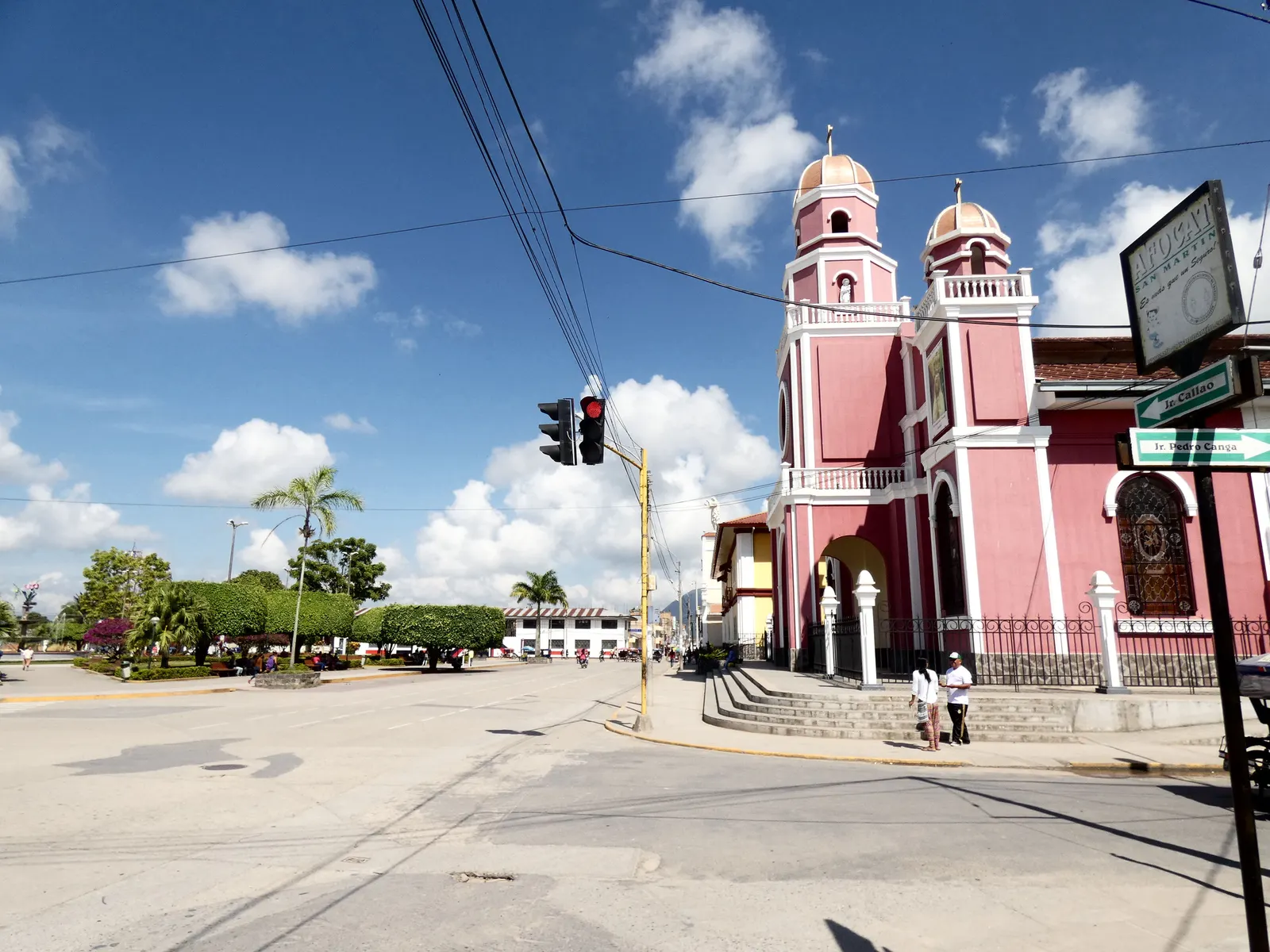
Every 25 July, the feast of Saint James (Santiago), Moyobamba celebrates its Spanish founding. The official date is 25 July 1540, and the recognised founder is Captain Juan Pérez de Guevara. Behind that date lies a story with more than one version, and it is worth knowing.
Before the Spanish
The city's name comes from Quechua. According to archaeologist Jorge Silva Sifuentes, of Universidad Ricardo Palma, it derives from Muyupampa, translated as "circular or round plain". Another reading links it to Mayopampa, "river of the plain".
Colonial chroniclers mention the people of Muyupampa. Garcilaso de la Vega names them alongside the Chachapoyas. Pedro Cieza de León says a group of Chancas settled here after being defeated by the Incas. Antonio de Herrera credits Túpac Yupanqui with the Inca entry into the Mayo valley.
The area's archaeology is still little studied. In 2014, excavations at Flor del Mayo, across the river, confirmed an ancient settlement. Its pottery resembles that of the period before the Incas (roughly AD 1300 to 1440) and shows links with Chazuta and with the Chachapoyas polity.
A founding with several versions
The Spanish came from Chachapoyas. Alonso de Alvarado, who had founded San Juan de la Frontera de Chachapoyas in 1538, pushed east and sent Juan de Rojas to explore. They called the people of the Alto Mayo "motilones", because they shaved their heads.
The key document is a provision signed by Francisco Pizarro on 7 June 1540. In it he names Juan Pérez de Guevara lieutenant governor and captain general, and authorises him to discover and conquer Moyobamba. Pizarro asked that the city be named after Santiago; Pérez de Guevara added "de los Valles" (of the Valleys).
Not all authors agree. Some credit Alonso de Alvarado with the founding in 1539. Others speak of "Santiago de los Ocho Valles" (of the Eight Valleys) and place it at Ocsapampa, about 4 km east of today's city. Silva Sifuentes notes that the 1540 provision speaks of "repopulating" Moyobamba, which suggests there were already Spaniards here. He also cites sources that give 1541 as the year of the first founding.
To settle the matter, the Provincial Municipality of Moyobamba set up a commission of four local teachers in 1988. The commission concluded that Juan Pérez de Guevara founded the city on 25 July 1540. That conclusion was recorded in Municipal Resolution 208/88-MPM of 21 December 1988, and it is the date celebrated today.
A frontier town
The early years were unstable. Between 1542 and 1554 the conquistadors fought among themselves. According to Silva Sifuentes, Moyobamba was left without Spanish residents more than once, because they joined the armies Pérez de Guevara raised. He himself spent only a few months in the city.
Silva Sifuentes also records two further details, each taken from a single author. One is a final refounding on 12 March 1549, at a place called Guaua. The other is a move: according to that version, the first city stood at Ocsapampa and, after an earthquake in 1746, was relocated to the plain where it is today. We have not found either confirmed in other sources, so they are best read as versions.
The first Spanish city of the Peruvian Amazon?
That is how Moyobamba is often described, in guidebooks and in the press. The idea has a basis: it was founded very early in the conquest, in the high jungle of the Mayo river, and Pizarro's provision already ordered further advances east from here.
The title is best read with some nuance. It depends on what counts as the Amazon, and the exact founding date is still debated. What is not in doubt is that Moyobamba was one of the earliest Spanish foundations in eastern Peru, and that its history began long before 1540.